One way to ease your way into conversation is to type stuff into the text chat. People read that and respond on voice.
1 Like
That’s helpful. I did not think anyone would.
Def do just listen in if that’s what you want, not that many people can really talk at once anyways.
1 Like

I subscribe to a twelve-step group’s newsletter for free daily readings. Got this one today.
We may not have experienced what we think of as serenity - we see it as something other people have, not us. We may not even know what serenity is, let alone where to look for it. What does it feel like?
It may be best to start by examining what we think serenity might be. Maybe it’s a magical, peaceful feeling that totally engulfs someone 24 hours a day, seven days a week. With this feeling, people never feel stress, fear or anxiety. Well, that’s a nice idea to contemplate, but we know in our heart of hearts it’s not reality.
A more realistic view of serenity is to think of it as a core of acceptance that already resides deep inside us; something that we haven’t yet tapped into or perhaps acknowledged. It may be small, even tiny now. But it will grow. We learn to recognize and feel little moments of it in our lives.
2 Likes
Of Coca Cola?
Of ironing
1 Like
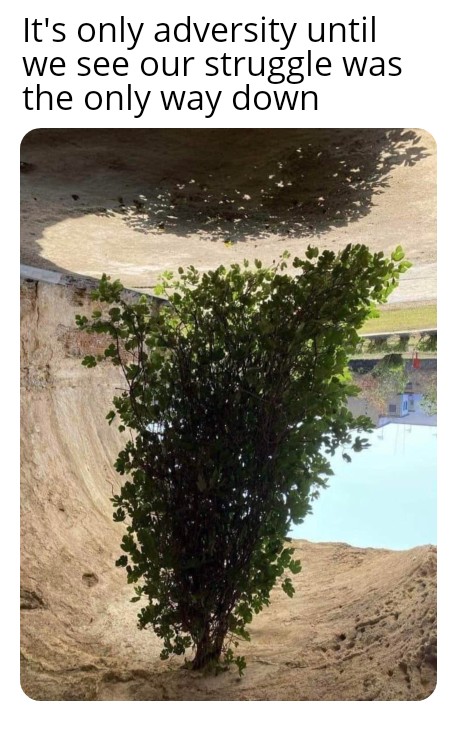
I am learning to appreciate anger (or emotions in general) and explore healthy ways to process and express that emotion. My family modeled violent expressions of emotions, so for decades, I’ve acted as though my only options were violence or stoicism. Where I came from, even love was weaponized. They expressed emotions as a tool of persuasion and their primary resource to express themselves and get what they want.
Our research team was interested in learning more about the words that romantic partners say to one another when feeling irritated or annoyed because these are often the moments that escalate into more intense conflict. Of course, we assumed that romantic partners would use more anger words such as “mad,” “hate,” and “stupid” when they felt more annoyed with their partners.
But we also wondered whether people’s past family experiences influence how often they use anger words. Considerable research shows that people who grow up in aggressive homes are more likely to be aggressive in their own romantic relationships. But no one has looked specifically at the language they use. It makes sense that people who grow up with aggressive parents might be more likely to use anger words when they feel irritated with their partners.
In addition, men who had received more verbal aggression from their parents while growing up tended to use more anger words in conversations with their partners, regardless of how annoyed they were at the moment.
The research distinguishes both what words we use and how we use them. Those are not the same thing, much as we tend to focus on our intent regardless of the impact, but when speaking to others, we judge their intent by the content of their actions.
For me, the point as ever is not what we say or even how we say it, but what kind of relationship was modeled for us in our family of origin. And therefore what kind of relationship we foster with the language we choose and how we use it in conversation with others.
When someone uses language without regard for how it impacts me, what they are telling me is that the language they prefer is vastly more important to them than fostering a healthy relationship with me. Or if not me, with the people their language hurts.
I work each day to come into greater awareness of these patterns in myself so that I might at least choose whether the language and behaviors that feel so natural to me are what I truly want to populate my mind and relationships with.
Note: no matter how intuitively satisfying, the study has severe limitations, further research is required, let’s see if anyone can replicate your findings, etc etc
To test this idea, we asked heterosexual dating couples in their early 20s to carry around a smart phone that recorded 50% of the couple’s conversations over the course of one day
7 Likes
This is such an opposite dynamic to the one that I grew up in. I have never heard my parents yell or fight with each other. Maybe a raised voice once or twice. I have never had a “typical teenager” argument/fight with them…slamming doors, telling them you hate them and wish you’d never been born, etc…with either of them.
This caused a lot of problems for me in my first LT relationship because my partner’s mother was bipolar and her parents had their bickering set at a low simmer with regular boiling overs. We both modeled our parents behavior, and I know it was flummoxing to her when I would refuse to escalate a disagreement into a battle royale.
Having said that, I’m not sure that I have a healthy relationship with anger either, as it was something to be suppressed and snuffed out without actually dealing with the emotion or catalyst.
Any more that you are willing share about this topic and your journey of growth and discovery, I’d be happy to read. Now or in the future.
5 Likes
The bolded in particular was a part of my experience, too. I see refusing to acknowledge and process emotions as being just as dysfunctional as someone who refuses to pause in processing them.
For a long time, my answer has been not to allow those experiences. But what would life be like if we weren’t allowed to experience or express anger? So I’m exploring both healthy modes of expression and healthy limits on those experiences.
Let me think more on it. I tend to write on these things first thing in the morning so will probably have some thoughts then. Same to you if you have further to offer on your experiences and what we can take from them.
4 Likes
This is me exactly. My parents did some arguing around one point when they had some issues over money but it kinda came to a head quickly and they resolved it and were fine afterwards. I didn’t really fight with them at all in teen years.
My whole family is very closed off emotionally though and anger suppression etc fits right in there like you said as something to be suppressed or snuffed out. It’s obvious about the emotions at least to spouses because my wife and my siblings spouses have talked about it, we all have, just that our family is that way and kinda coldish i guess.
When we were going to marriage counseling, the therapist thought i might have intimacy anorexia. And I might i dunno, i picked up a book about it but didn’t really feel like it was me but I’m sure some points of it connect and I should probably revisit it. Especially post divorce when I enter into a new relationship at some point, I plan to be more open and honest. Even now though I know I’m divorcing her, I have a lot of built up anger that I feel like I can’t express to her because I don’t want to rock the boat before we sign off on everything. It feels really entrapping and depressing to be honest. Honestly I felt like or at least told myself, but I feel pretty confident that I had trouble expressing anger or criticism with her because she was always super defensive and would just put it back on me and nothing changed so I felt like it was a waste of time. I dunno, enough of a derail but I’m interested in talking about it.
5 Likes
Some texts refer to this as “coming out of denial,” but I prefer to refer to it as “coming into awareness.”
Man, life is hard right now. Can someone give me a good story about antidepressants? I’m rather attached to being me and worry that I would rather be myself and miserable than be someone else and happy.
1 Like
Thank you. I appreciate you sharing your experience.
1 Like
Ive been taking escitalopram for many years now. I’ve never for a moment felt like it made me less like myself. It’s more like it takes the edge off anxiety/depression and helps you process things a little more easily.
5 Likes
This is me
2 Likes
I broke up with someone at the beginning of the month but had tried to maintain a friendship. On Christmas, they told me they’d cheated and said some other stuff that seemed mostly designed to hurt me.
Via online chat, I subsequently said I needed time to process things and would get back to them when I was ready. They responded, “Ok, but I want to say this one more thing …” and at this, I kind of lost it and went off.
Since then, my dreams have been really disturbing and I’m facing a fair bit of self-loathing over this. Both over what the dreams dredge up, and how I expressed my anger towards my ex.
Right now I look around the house and it feels filthy and I just want to be somewhere warm and sunny and dry, with someone I trust, instead of facing months of an upstate winter.
To boot, and unrelated, a friend I was looking forward to chatting with failed to show up for a regularly-scheduled hike this morning. Which left me wandering around a 25-degree parking lot before dawn waiting, until I finally gave up.
I think there are lots of very good and necessary lessons I can take from this–about how to healthily express my anger, about unhealthy lessons I internalized as a child, about the need to trust my gut when things feel off. But for now, I’m just feeling kind of rough.
14 Likes
Drugs don’t turn you into a different person. They impact the options you have to experience and express yourself, but YOU remain the same. Think of how more commonly accepted drugs alter your state: caffeine, sugar, cannabis, etc.
It’s more like you’re going to a restaurant. Same you, same restaurant, but a drug changes what options you can select from the menu. Like if you had heartburn every time you ate chicken. But now you can eat it. Maybe you also can’t drink alcohol at the same time you eat chicken now, but if eating chicken is a metaphor equivalent to being able to feel pain (and joy!) without falling apart, the trade off more than makes up for it.
There are other drugs that will take away menu options you value too much to discard. A good doctor will help you find the right antidepressant that manifests the menu most healthy for you.
For me, finding the right medication changed my life. Options became available to me that had forever seemed out of reach.
My one concern is that I have an unhealthy phobia of doctors and medicine, which has compelled me to insist on taking the lowest dose possible as long as I’ve been on the medication. People who spent their lives becoming experts in this stuff–doctors–tell me the low dose isn’t therapeutic. It changes enough of my experience of myself to matter to me, but the rest of the world (and let’s be honest, me too) are still struggling with my how my mental illness manifests.
My phobia is robbing me of the option to explore more significant, meaningful treatment. I won’t even tell a doctor what my symptoms are. I tell them vague things and hope they see what I’m really saying. I don’t talk about the first two decades of my life a lot outside of writing weird books people assume are just fantasy novels. Treatment might require me to finally tell someone what happened.
Well there you go, cassette. I started off telling you about the many virtues of doctors and drugs and now am telling you they scare the hell out of me too lol.
8 Likes
I started by wanting to reply to this:
Saying how it was greatly phrased (it is), and it eases a lot of the stigma I’ve ever had at the thought of me taking them, as well as immediately clearing up any (never expressed) judgement of others that do.
I still feel that way ftmp. But then started hemming and hawing thinking about it more and deleted the pre-post.
I’m back baby! Same.
4 Likes