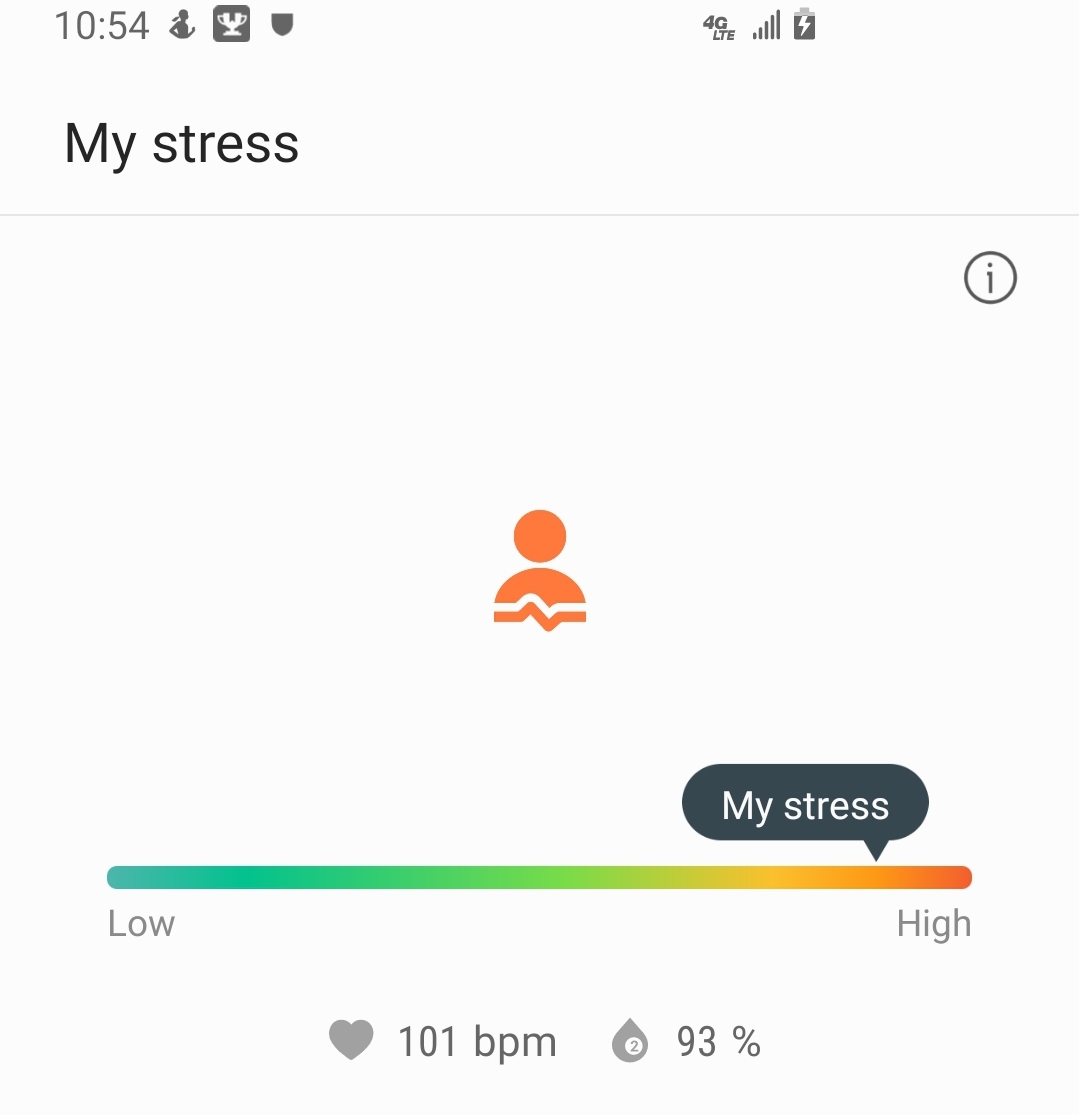
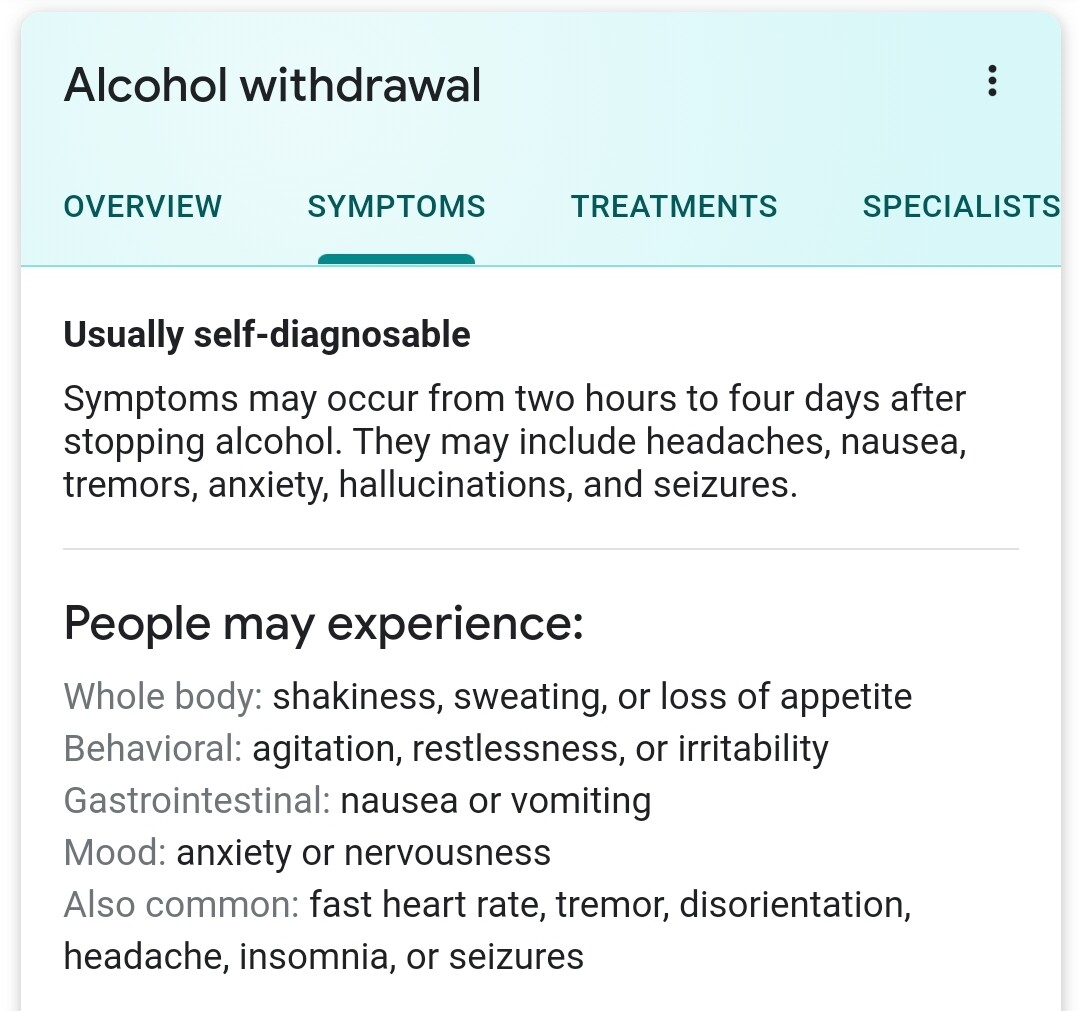
@CaffeineNeeded I woke up with some very strange numbness in my extremities and pretty crippling anxiety in the middle of the night last night. I realize you can’t diagnose me but is that more likely to be Covid symptoms or alcohol withdrawal?
I’ve probably been drinking 30-40 drinks a week during Covid and have always been a pretty heavy drinker. I’ve attempted some time off before and always feel like shit but normally not like this. The fever and pulse ox part worry me. The fact it is perfectly coinciding with no alcohol makes me think it could be that though.
You have a doctor who has been treating COVID for like nine months (CaffNeeded) telling you to go to the ER. Don’t fuck around!
Even if they can’t get you admitted maybe they can get you O2 if needed, or at least you’re in line to get treatment. Go and make sure they know your pulse ox as soon as you walk in.
Well to be fair he said if I consistently get those pulse ox readings I should go and I agree with him and will take that advice. Googling the accuracy of my phone pulse ox reader also leaves me with a lot of questions. I’m going to check again here in a bit and see if it is still similar.
I recently had a heart “episode” (first ever) where my resting heart rate was in that range. My Apple Watch reported atrial fibrillation. Of course it was a Sunday and I also didn’t want to go to the ER, so I called my doctor on Monday. They told me I absolutely must go to the ER if that ever happens again and that I’m lucky I didn’t have a stroke.
Yeah, that was the result of my Monday call to my doctor. He made me come to his office immediately for a real EKG, and now I’ve got a follow-up with a cardiologist in a couple of weeks.
Well you guys are doing a good job of scaring me this morning. I wasn’t even considering going to the ER an hour ago and now I obviously am. I still think I will listen to Caffeine and monitor it and if it stays poor I obviously need to go.
My health situation might be relevant. I actually have had an EKG done recently as I have mild hypertension/high cholesterol and a normal resting heart rate in the low 90s. I am on a beta blocker, crestor and a blood pressure med. So 100-112 is high for me but not off the charts. The EKG was clean btw.
My symptoms also fairly neatly fit into this category as well:
You are always one of the first people I think of from your 2+2 thread whenever I consider quitting btw. Just wanted you to know you have a positive impact on people you probably don’t even know the extent of.
That sounds like a panic attack more than anything. Simple fact is that if your resting spo2 is really 90% you need an eval. Not much more to it than that
Your tip about testing different fingers seems to be a good one. I get anywhere from 90-94 depending on which finger I test. Who knows how accurate my phone is also. I probably need to order a real one.
The study enrolled participants at two UK sites in Oxford and London between April and August 2020. Two hundred and one individuals (mean age 44 (standard deviation 11.0) years) completed assessments after SARS-CoV-2 infection a median of 140 days after initial symptoms.
Participants were eligible if they tested positive for SARS-CoV-2 by random polymerase chain reaction swab (n=62), a positive antibody test (n=63), or had typical symptoms and were determined to have covid-19 by two independent clinicians (n=73).
The prevalence of pre-existing conditions was low (obesity: 20%, hypertension: 6%, diabetes: 2%, heart disease: 4%), and less than a fifth (18%) of individuals had been hospitalised with covid-19.
The most commonly reported ongoing symptoms—regardless of hospitalisation status—were fatigue (98%), muscle ache (88%), shortness of breath (87%), and headache (83%). There was evidence of mild organ impairment in the heart (32% of patients), lungs (33%), kidneys (12%), liver (10%), pancreas (17%), and spleen (6%).
Two thirds (66%) of participants had impairment in one or more organ systems and there was evidence of multiorgan impairment in a quarter (25%) of individuals, with varying degrees of overlap across multiple organs.
Multiorgan impairment was significantly associated with risk of prior covid-19 hospitalisation (P<0.05). Measures of inflammation in the kidneys and pancreas, and ectopic fat in the pancreas and liver, were also higher in hospitalised individuals (P<0.05).
I’m sure you know this, but just in case… Alcohol can raise your RHR. Mine is usually 63-73, the day after I drink more than two drinks it can be 80-95. It’ll be 90-105 while currently drinking. Also exercise before or after drinking seems to mitigate some of this - presumably by burning it off.
Like if I’m traveling and thus walk around after drinking, it will be less significant.
Covid-19 could be causing lung abnormalities still detectable more than three months after patients are infected, researchers suggest.
A study of 10 patients at Oxford University used a novel scanning technique to identify damage not picked up by conventional scans.
It uses a gas called xenon during MRI scans to create images of lung damage.
Lung experts said a test that could spot long-term damage would make a huge difference to Covid patients.
The xenon technique sees patients inhale the gas during a magnetic resonance imaging (MRI) scan.
Prof Fergus Gleeson, who is leading the work, tried out his scanning technique on 10 patients aged between 19 and 69.
Eight of them had persistent shortness of breath and tiredness three months after being ill with coronavirus, even though none of them had been admitted to intensive care or required ventilation, and conventional scans had found no problems in their lungs.
“The first vaccine shipment will happen on the day after the vaccine is approved.”
Once FDA approval has been granted in the US, the vaccine is expected to be made available first to the country’s million healthcare workers and three million elderly people living in long-term care homes. It is up to states to decide which groups should be prioritised next.
Moncef Slaoui said he hoped the Food and Drug Administration (FDA) could give the go-ahead to a vaccine when it meets this week.
But for life to get back to normal by spring (LOL, Spring 202x), Americans still needed to follow safety measures, he added.