So this might be not interesting at all but I’m so bored it’s painful and I like talking about food.
It seems that there’s a rising interest in “Israeli food” in the culinary world, both in Europe and in the US. Last year James Beard award went to Zahav, an Israeli restaurant in Philadelphia. A year back it was Alon Shaya who took the James Beard Award for best Southwest chef for his Israeli restaurant in New Orleans.
Both restaurants serve pretty ‘basic’ Israeli-food. I’m sure they are high quality, but they would be extremely pedestrian menu in Tel Aviv.
Israeli celebrity-chef such as Eyal Shani and Assaf Granit already have 10+ highly successful restaurants in Europe.
I would imagine one misconception about Israeli food is its relation to what is considered Jewish food in the US. There is no such thing in Israel. No one eats Bagels. Lox and cream cheese is not a thing. Pastrami is made from turkey and is a lunch meat for kids. Oh, and Matzoball soup is only eaten at Passover and it looks nothing like the giant tennis balls served in NY Deli’s.
In fact, almost all popular Israeli food comes from the “Sephardic Jews”, especially the ones from North Africa and Iraq/Iran. That culture mixed with the Palestinian and Arab influence and European techniques is the base for almost all successful modern Israeli cuisine.
So now to what actually made me write this. Yuv wants dishes he used to eat all the time and can’t really get decent versions now. And the first dish is one of my favorite street food ever –
Sabich.
The origins are probably from Iraqi-Jews and a similar dish eaten on Saturday morning (Sabach means morning in Arabic). It is a vegetarian dish (although not vegan), eating inside a pita bread (or pita pocket as I think it’s called here). The main ingredient are deep fried eggplants strips or slices. The eggplant is not usually breaded so while it has a bit of crispy exterior, it is more of a ‘mushy’ or soft texture.
The other ingredients are Tahini sauce (the nectar of life). Usually on the thinner side (as oppose to a spread). “Salad” is an Israeli term for a chopped salad consisting of tomatoes, cucumbers, onion and parsley with lemon juice and olive oil. Boiled potatoes, which are on the blend side and mostly provide texture in my opinion. Sliced Hard-boiled egg, the only non-vegan element of the dish but a must. Amba, perhaps the most controversial, which is a mango-chutney type sauce that is very savory and pungent and usually fall into the “love it or hate it” category. And lastly Zhug, a Yemeni hot sauce.
Some people spread hummus in the pita, but they are wrong and probably spread coronavirus.
A good Sabich is first and foremost about the quality of the eggplants and the frying technique. If you see a bunch of pre-fried eggplants to sweat under a heat lamp, move away from the vendor. The second part is layering. Each bite must consist of all the elements inside the pita. The difference between a good Sabich and a legendary one is the ability to build the pita in layers.
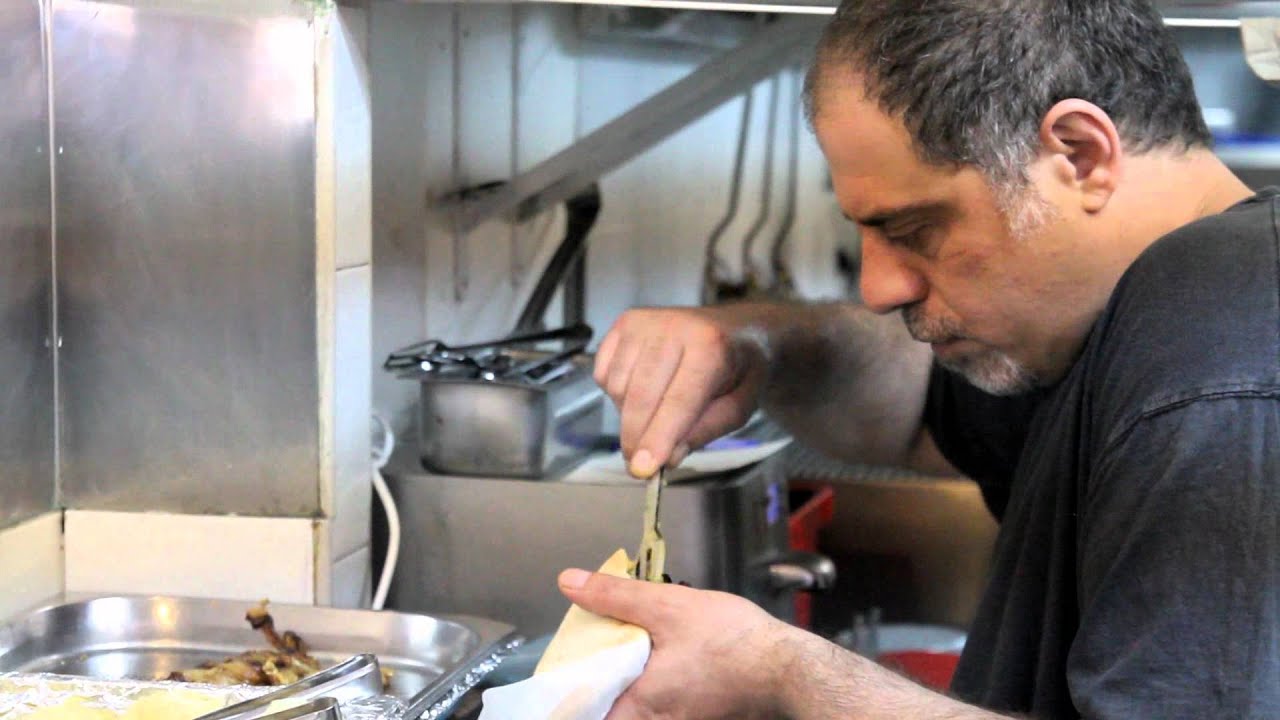
While there are a few more famous places and Effi, the master in this video, has since retired, this was my favorite Sabich place in the universe. I lived right around the corner and while the line was terrible and the amount of time “wasted” on making each dish was almost comical, nothing could beat the results. I hope to see it on a Netflix “street food” episode eventually:
[sorry there’s no spell check option here plus I’m very hungry]