Reading “Bury my heart at wounded knee” so far feels like watching Titanic. You know the outcome and you know it wont ever change but still i want to scream “Stop being so fkn naive.”
Finished The 7 1/2 Deaths of Evelyn Hardcastle last week by Stuart Turton, and really enjoyed it. An interesting twist on seeing a mystery unfold through several different viewpoints. Nice pacing that moved right along till the end. Looking forward to reading more of his stuff.
Picked up a PocketBook InkPad Color 3 e-book reader because I don’t care for Amazon, and the Kobo got a bad review from a friend of mine, and my giant iPad, while great for programming books, is too heavy to read recreationally. So far so good, the only weirdness is that it won’t hook up to an American store so all the prices are in Euros. Which is fine, I use Calibre and the internet to get books onto it which is slightly more of a hassle than Kindles, but it is DRM free, which I prefer.
Trying to decide what I want to listen to next on audible. Currently I listen to “Sapiens: A brief History of Humankind”. Its quite interesting but few days ago I also read comments that people dont understand how his books are so popular because his assumptions are wrong or so.
Someone suggested Jared Diamond “Guns, Germs and Steel” but I always make the mistake at looking at the 1star reviews and become insecure. Is there a list with good recommended science books?
So I went through some options but the next Sharpe book from Cornwell isnt available on audible so I would have to read it. So the next option would be Corey and the Expanse books. If I am not mistaken the tv show didnt cover all 10 books. I read the first 3 so my question would be:
Is it worth it to go through all 10 books?
More on the design side than the science side, but The Pencil by Henry Petrosiki was pretty interesting. Surely You’re Joking Mr. Feynman is a nice biography of Richard Feynman. I liked Guns, Germs, and Steel even though it turns out to have some problems, listening to it and then the If Books Could Kill podcast might be fun… More fun than it was not knowing the problems going up front…
I think I need to read so current popular science books, all of suggestions are old…
I usually look at the two star reviews. They didn’t like the book and will give reasons why
I enjoyed reading Guns, Germs and Steel, but since it reads more like a textbook, and has lots of maps and charts, I can’t imagine listening to the book.
Guns, Germs, and Steel is much better than Sapiens. It’s an excellent book that is disliked by all the right people.
1077 BC is an interesting book about the interconnectedness of the ancient world and the bronze age collapse.
The Crusades: The Authoritative History of the War for the Holy Land
by Thomas Asbridge
4/5
As the title says a book covering the crusades. Playing Crusader Kings helps out a lot in knowing names and places. Big take away at the conclusion was that the Crusades didn’t actually have much of an affect in the immediate time. The Muslims saw it as an incursion but not existential (unlike how 20 and 21st century Jihadhis would portrays them) and for the Christians it was an important religious thing but also far away so meh. If the Crusaders did good then it was by the grace of God but if it failed, oh well that was over there.
The first Crusades kind of shocked everyone with the amount of mass mobilization and the surprising wins. After the Muslim counter attacks and fewer wins and setbacks of the later Crusades they petered out.
I saw the follow up book to 1077 BC in the book store today. Thanks for bringing that up again I already forgot to vheck it out.
Stumbled over Bill Bryson’s “Short history of everything” and took a copy with me.
Being Mortal: Medicine And What Matters In The End
By Atul Gawande
I went into this book kind of expecting it to be a high level discussion about the practice of medicine, very academic, and dry.
It’s not, it’s very emotional because it’s all about when a patient is dying, culminating in him being there when his father dies. It sometimes makes it a hard read because, as he says in the book, we personally and as a society want to push off the fact that we’re all going to die.
Interesting take aways. There’s a factoid that Western people push their parents away while Eastern people live with their parents in multi generational households sometimes with the implication that the multi generational model is better.
His take away is that that difference isn’t mainly cultural but financial and as Eastern countries like India and China become richer they’ll follow the path that Americans and Europeans take which was die at home, usually with no care - > die in a hospital because now hospitals have been built - > die in a nursing home because the hospitals have filled up - > die at home, with some kind of hospice because you have thr money to afford people to help out and machines at home.
Other small things is surveys showed that old people don’t like living with younger people they’d usually like to live by themselves but also be close enough to enjoy seeing their family.
Also nursing homes weren’t some kind of intentional invention they came about because hospitals were full of people who were chronically sick and needed assistance but not acutely sick, and the nursing homes originally started as a place that the less chronically sick could be put short term but they needed Medicare funding so they promised they would eventually get their care up to hospital level, which they never did and the requirement constant kept getting pushed back, eventually creating a new kind of class of care.
Anyways it’s a tough book. He’s a Yale(?) physician and a good writer so there are plenty of deep dives, asking what if questions, etc. Definitely recommend for anyone who might have parents getting up there in age
Tom Lake
by Ann Pachett
While picking cherries a women tells her daughters about her move to Hollywood and fling with a now major movie star.
I’d put this and My Old Ass in a similar vein. Heart warming, small scale, and enjoyable. I never really lost interest but it also never super grabbed my interest.
(I’d also put My Old Ass and this book in the same vein because the motif that there is a last time you do something but you don’t know it when you’re doing it appears in both the film and this book. )
I read this book over the summer while my mom was dying, and I wished I had read it sooner. In the early stages of her decline, we took her to the hospital for help when we didn’t know what to do because ‘hospitals = medicine and care’. What she really needed, and where we eventually landed, was hospice. Which, going back to the book, is one of the central themes in Gawande’s message: at the end stages of life, treat the person and not the symptom. My mom didn’t need an IV and a doctor to say “we’re gonna get you outta here soon”. She needed a comfortable bed in her favorite room and peace in her mind.
It’s a great book, and eye opening in several of the ways you described. Hospitals are designed to diagnose an acute issue and then get the patient discharged so there’s room for the next person. That’s actually like the last thing dying people need. I never thought of it like that until Gawande said it.
I’ve given it to a few friends. It’s a great book.
After digesting the history of everything, GGS offers a theory to explain the history of everything. Diamond may not always be right, but he’s playing on hard mode and trying to blaze a trail across the landscape. In this sense, he’s more a natural philosopher, like Darwin, than a normal writer.
I read three comic book limited series.
The first was Superman: Secret Identity.
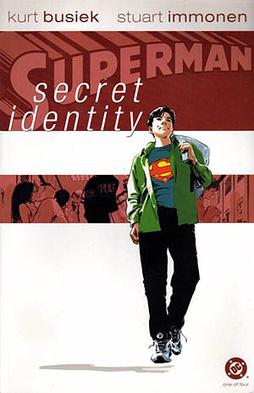
This is set in a world where there are no superheroes and Superman is just a comic book character. The protagonist comes from the Kent family in Kansas. His parents thought it would be funny to name him Clark. He’s been bullied and made fun of at school because of it. And even his family gives him Superman-themed gifts for his birthday, ignoring that none of it is fun for Clark. Until one day as a teenager, Clark suddenly manifests the powers of Superman.
This is the most grounded take on Superman I’ve ever read.
I was eager to discover if anyone had given Supergirl the same grounded treatment, and lo and behold they had! Supergirl: Being Super is just as good as Secret Identity.
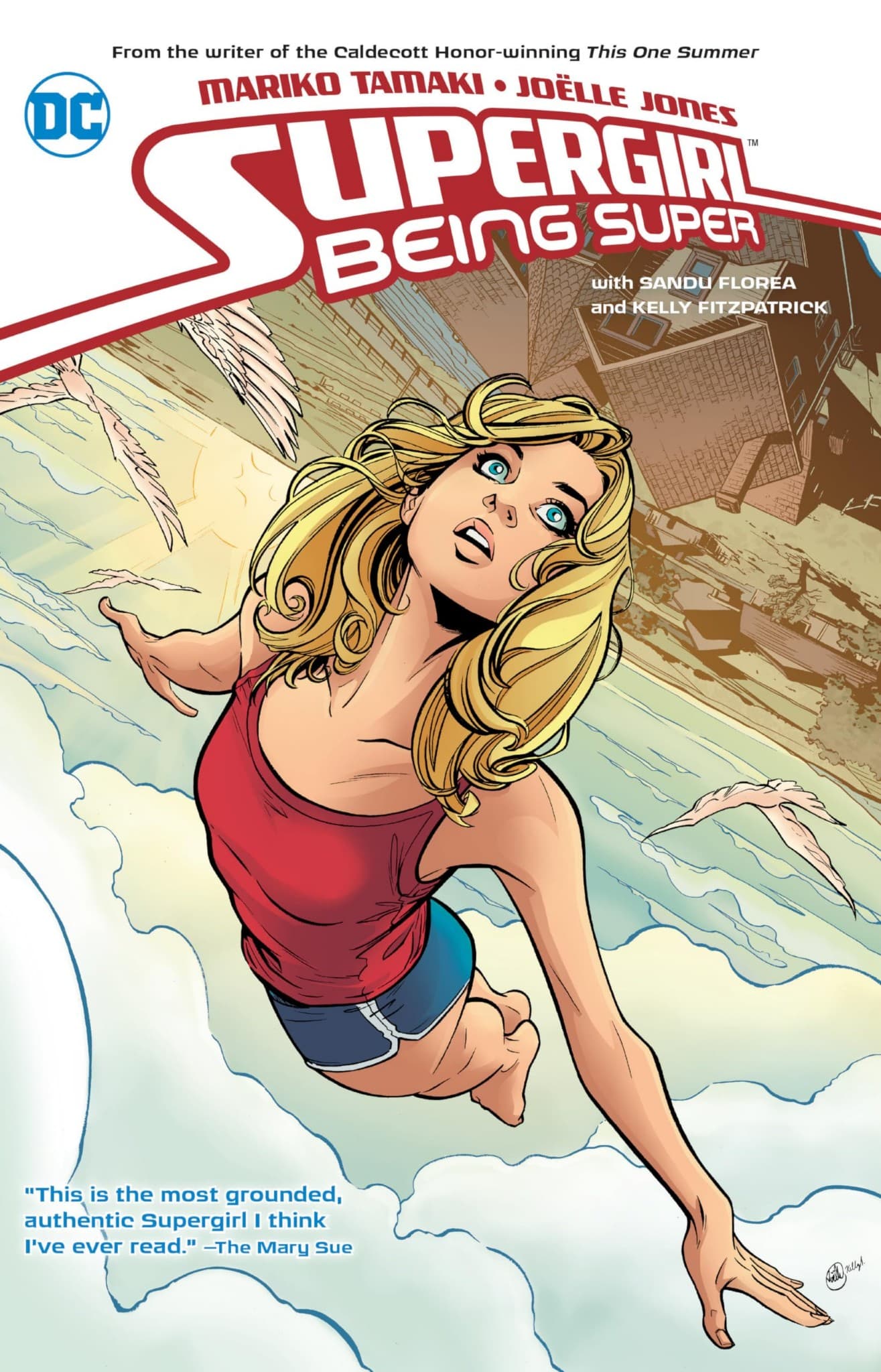
It features Supergirl if she’d crashed on earth as a kid without the mission to find Superman and mentor him. Instead, her ship arrived years after Superman landed but before he revealed himself. This Supergirl grows up as a teenager who manifests powers (and zits) amidst normal teenage girl problems. She has friends, boy problems, school trouble. This is everything I wanted in a Supergirl limited series.
Then I read Terminator: Cybernetic Dawn, which for me is the most outstanding sequel to Terminator 2 yet to be explored.

The series was produced with Cameron so feels much more in keeping with the films than subsequent efforts. It picks up moments after the end of T2 and thus features several recurring characters, least of which is Edward Furlong’s version of John Connor.
There quite possibly might be a trillion + comics published over the last 100 years and such a large % of them get ignored due to a whole host of obv reasons but there are so many good runs out there that are swept under the rug.
I picked up the about half of the run of Strangers in Paradise by Terry Moore and have definitely enjoyed it. Also reading the 1986 verson of Airboy, both series are some of the most least desirable stuff around, but the stories in SinP and the artwork alone in Airboy - by a mostly no name artist, keeps me entertained for weeks. And there is an endless assortment of stuff like that.
For me, comics are the perfect mix of everything I love about books and movies. Like you said, there are so many good runs out there that get ignored for the sheer volume of releases. I had the great fortune of being allowed to devour the entire stock of a comic book store and all back issues when I was a kid because the owner let me pick out whatever I wanted and just take it to the back and read it.
Some of my other all-time faces include the Age of Apocalypse in which the X-Men tell the story of what happens if Professor X was killed before he could form the X-Men, and it’s devastating.
Was also a huge fan of Superior Spider-Man in which Peter Parker “dies” and his body is taken over by Doctor Octopus. There’s a great moment where doc Ock realizes how strong Spider-Man really is and that he was taking it easy on Ock the whole time.
And of course there’s really no equal to that early run of Spawn. Damn was that a revolutionary publication.
Now of course I’ve lost touch with most of what’s happening in Marvel and DC, though I still read stuff like ScreenRant rundowns to keep up with the big events.
How was everyone’s reading year? I finished around 25 books in 2024, which is a little below my average. I say “around” because there were a couple I wasn’t sure I should count. One audiobook, for example. And one that I skimmed the last 1/4 of just to see who done it.
I had a few shitkickers in there that took a while. I read the three volume set on the war in the Pacific by Ian Toll. Highly recommended if you have any interest in that.
Some recent ones:
The Book Nobody Read. Owen Gingerich. 5/10
This is about Copernicus’s De revolutionibus–mainly about the physical copies of the first and second editions, and who owned/owns them. Although obviously there is some history of Copernicus and the ideas in the book. Some interesting stuff but ultimately kind of dull. I don’t care very much about who owned what copy and what they wrote in the margins.
A Brief History of Black Holes. Becky Smethurst. 8/10
Pop science, but pretty well done. Up to date discussion on everything black hole-related, along with some general astronomy stuff. Some pop culture references sprinkled in that could bother some people (they didn’t bother me).
Nature’s Metropolis. William Cronon. 7.5/10
A deep-dive analysis of the history of Chicago, based on how commodities and some other factors shaped the city and the surrounding region (grain, lumber, meat, railroads, waterways). Kind of dry and tedious in spots but lots of interesting history. E.g. the emergence of the Chicago commodities markets, how grain transport drove regulations, etc. I’m sure this book set a record for most instances of the word “hinterland”.
Destiny of the Republic. Millard. 6.5/10
Pop history, but fairly well done. A brief overview of President Garfield’s life, with an emphasis on his assassination and how badly the medical response was bungled. The germ theory was mostly accepted in Europe by then, but the US was lagging, and the doctors used their grimy fingers to poke around for the bullet.
The Death and Life of the Great Lakes. Egan. 8/10
A little mis-titled. I thought it would be a geological history of the Great Lakes. Instead the focus was invasive species. Once you get past that, some really riveting stuff. It’s amazing how fast the balance tips. I expect such a tip in some of our oceans in the coming decades, although that’s more climate and pollution than invasive species.
I didn’t read a ton of novels this year, but my favorite one was Stoner by John Williams. 9/10 The dreary and melancholy life of a Midwest professor.
Audiobooks count
Got to 60 again. Read 9 more Pulitzer. Down to about 40 or so left.
20 new books read plus another 10 or so that were repeat readings but Kindle doesn’t track those. Probably a pretty average year, changed up my genres a bit and ventured out from my fantasy stuff with some light non fiction, sci-fi and King books.